EAC Sensitises EALA Committee on Seed and Plant Varieties Bill, 2025 and Youth Empowerment
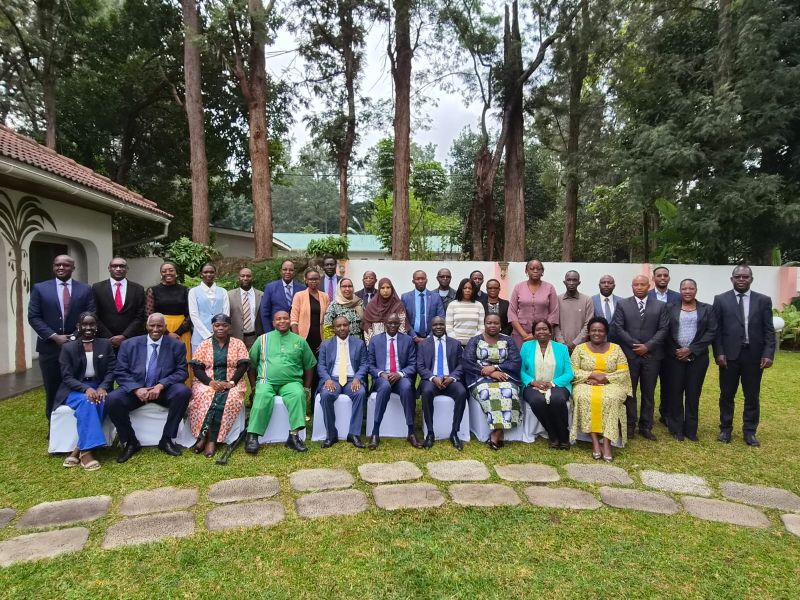
The EAC Secretariat has concluded a three-day sensitisation workshop for the East African Legislative Assembly (EALA) Committee on Agriculture, Tourism and Natural Resources Management, focusing on the EAC Seed and Plant Varieties Bill, 2025, youth empowerment through the EAYASE Platform, and implementation of the Regional Agriculture and Food Systems Investment Plan (RASIP). The meeting highlighted regional agricultural integration, climate-resilient farming, and expanding opportunities for young people in agrifood systems.
The East African Community (EAC) Secretariat successfully concluded a three-day sensitisation and capacity-building workshop for the East African Legislative Assembly (EALA) Committee on Agriculture, Tourism and Natural Resources Management (ATNR) in Moshi, Tanzania. The workshop brought together members of EALA, technical experts, development partners and youth representatives to strengthen understanding of regional agricultural policies that will guide food security, agricultural transformation and youth empowerment across the East African Community.
The workshop was jointly supported by the Alliance for a Green Revolution in Africa (AGRA) Project and the Enabling Sustainable Regional Agricultural Extension (ENSURE) Project, funded by the African Development Bank (AfDB). Discussions focused on preparing legislators for the upcoming public participation process on the proposed EAC Seed and Plant Varieties Bill, 2025, while also exploring opportunities to strengthen youth participation in agrifood systems.
Strengthening Regional Seed Systems through the EAC Seed and Plant Varieties Bill, 2025
Developed under Article 106 of the Treaty for the Establishment of the East African Community, the proposed EAC Seed and Plant Varieties Bill, 2025 seeks to establish a harmonised regional legal framework for the development, registration, certification, production, marketing and movement of quality seed across all EAC Partner States.
The Bill aims to:
Harmonise procedures for evaluation, registration and certification of plant varieties throughout the region.
Facilitate cross-border trade in quality seed by reducing regulatory barriers between Partner States.
Improve farmers' access to certified planting materials.
Encourage innovation in plant breeding while protecting indigenous seed varieties and traditional farming practices.
Strengthen regional food security through improved seed systems.
During the workshop, legislators also examined the importance of incorporating climate-smart characteristics such as drought tolerance, early maturity and resilience to changing climatic conditions into future seed variety release standards.
Hon. Gideon Gatpan Thoar, Chairperson of the EALA Committee on Agriculture, Tourism and Natural Resources Management, noted that the workshop had equipped Members of Parliament with the technical knowledge required to effectively scrutinise the proposed legislation, engage meaningfully during public consultations and contribute to the development of sound regional laws.
Empowering Young People through the EAYASE Platform
Youth empowerment was a central theme throughout the workshop. Participants acknowledged that although agriculture remains one of East Africa's largest employers, many young people continue to face challenges including limited access to finance, technology, markets and policy decision-making processes.
To address these challenges, the EAC Secretariat highlighted the EAC Youth in Agrifood Systems (EAYASE) Platform, which complements the EAC Youth Portal by creating opportunities for young people to actively participate in regional agrifood systems.
The platform aims to:
Promote digital innovation and technology-driven agriculture.
Improve youth access to finance, investment opportunities and markets.
Support entrepreneurship across agricultural value chains.
Increase youth participation in agricultural policy development.
Strengthen regional collaboration among young agripreneurs.
During the discussions, delegates highlighted Rwanda's youth governance structures as an example of how young people can be effectively integrated into local leadership and agricultural development programmes. Participants encouraged greater adoption of similar inclusive approaches across EAC Partner States.
Advancing the CAADP Kampala Declaration and RASIP
The workshop also reviewed the East African Community's commitments under the Comprehensive Africa Agriculture Development Programme (CAADP) Kampala Declaration (2025–2035).
Hon. Andrea Aguer Ariik Malueth, Deputy Secretary General responsible for Infrastructure, Productive, Social and Political Sectors, briefed participants on the region's progress towards achieving continental agricultural development goals.
Technical presentations delivered by Dr. Paul Guthiga of AKADEMIYA2063 reviewed findings from the latest CAADP Biennial Review, which showed that while the East African Community has made measurable progress, additional efforts are required for the region to remain on track towards achieving its agricultural transformation targets.
Participants also discussed implementation of the EAC Regional Agriculture and Food Systems Investment Plan (RASIP), adopted on 3 July 2026. The investment plan provides a coordinated regional framework for agricultural transformation through six thematic pillars that promote sustainable production, climate resilience, regional trade, investment mobilisation and inclusive participation of women, youth and persons with disabilities.
Key Outcomes and Next Steps
The workshop concluded with several recommendations to strengthen regional agricultural development:
1. Refine provisions within the EAC Seed and Plant Varieties Bill, 2025 to balance innovation with protection of indigenous seed systems and farmers' rights.
2. Strengthen national seed authorities, laboratories and certification infrastructure to support harmonised regional seed systems.
3. Expand public awareness and stakeholder consultations ahead of the Bill's adoption.
4. Accelerate implementation of the EAYASE Platform across Partner States to increase youth participation in regional agrifood systems.
5. Strengthen collaboration between governments, development partners, research institutions and the private sector to build resilient, inclusive and sustainable food systems.
The sensitisation workshop represents another significant milestone in advancing regional agricultural integration, harmonised seed systems and youth inclusion. Through stronger legislation, coordinated investment and enhanced youth engagement, the East African Community continues to build a more resilient, competitive and sustainable agrifood sector for the region.